

Business
Your hotel software may be worth more inside your hotel business
In-house hotel software built for your own properties can be a real operating advantage. Turning it into a separate hotel SaaS business takes a different kind of evidence.
4NLab · 2026-11-01
Which business are you asking someone to back?
You run hospitality properties. You have guests, staff and the capital demands that come with buildings. You've also built in-house hotel software that helps the operation run.
Now you want to raise money. Do you pitch the operating company or the platform?
We understand the pull of the second story. Software sounds more scalable. Add AI and the pitch feels current. But calling something a software company doesn't make it one. Our first question would be what the platform is actually proving today.
Your own rooms prove usefulness, not an external market
A few hundred rooms is a lot to operate. It doesn't show that an independent software business has customers.
An internal team can get enormous value from software built around how it works. That value is real. It's also a much easier test than getting unrelated operators to buy, move their data, train their staff and renew.
Outside customers bring their own priorities. They can say no. They call support at bad times. They may decide the integration they need matters more than the feature your own team considers essential.
The platform has to win that business on its own. Your portfolio can't answer for it.
A platform can be valuable without being the business you raise money for.
Your operating knowledge is useful, and specific
An operator knows problems a software team might miss. That's an advantage. But knowing one operating model deeply doesn't make the system built around it fit another.
We've built enough hotel software to get nervous at the sentence "It works for us, so anyone should be able to use it." Operators differ in finance practices, approvals, room configurations, service processes and how much control they expect.
A setting added for the second customer turns into a custom workflow for the third. That's how a product drifts into the middle, where it fits nobody well. An outside software business needs product, engineering, onboarding and support well beyond what keeps your internal system running. You have to decide whether you actually want to build that company.
Put the technology in the operating case
If the platform makes your hospitality company perform better, start there. Show what improves: the work it takes to manage a property, how consistently you collect, how fast exceptions get resolved, or whether you can open another location without duplicating every task.
Be specific about the money. Weigh any gain in operating profit against the recurring cost of building and maintaining the software. The properties' capital needs still have to be explained, too.
In that story, the platform is part of why you're a better operator. It can support earnings and your ability to repeat what works. The technology doesn't need to be dressed up as a separate startup to matter.
Let outside demand justify a second business
There may be a case for selling the platform on its own. A separate hotel SaaS business needs evidence from unrelated paying operators, not only results from your own properties. We'd want to see a clear buyer, an onboarding process you can repeat, customization you can manage, and a price that covers delivery and support.
That's a test to run, not a conclusion to assume. A small paid pilot outside your portfolio would show both the opportunity and the work nobody noticed while everyone shared the same operating model.
Spinning the platform out also raises the question of priorities. If outside customers need one thing and your properties need another, who gets the next release? Setting up a new company doesn't settle that.
Our starting view is to keep the advantage where it already creates value and build the operating story around the results. If a separate software business shows up, let customers be the evidence, not the appeal of calling it tech.
More articles
All Business articles → Business
Compliance software has an urgency problem
A buyer can agree the risk is real and still put off the purchase. The commercial work is turning that concern into a funded piece of work someone owns.
 Business
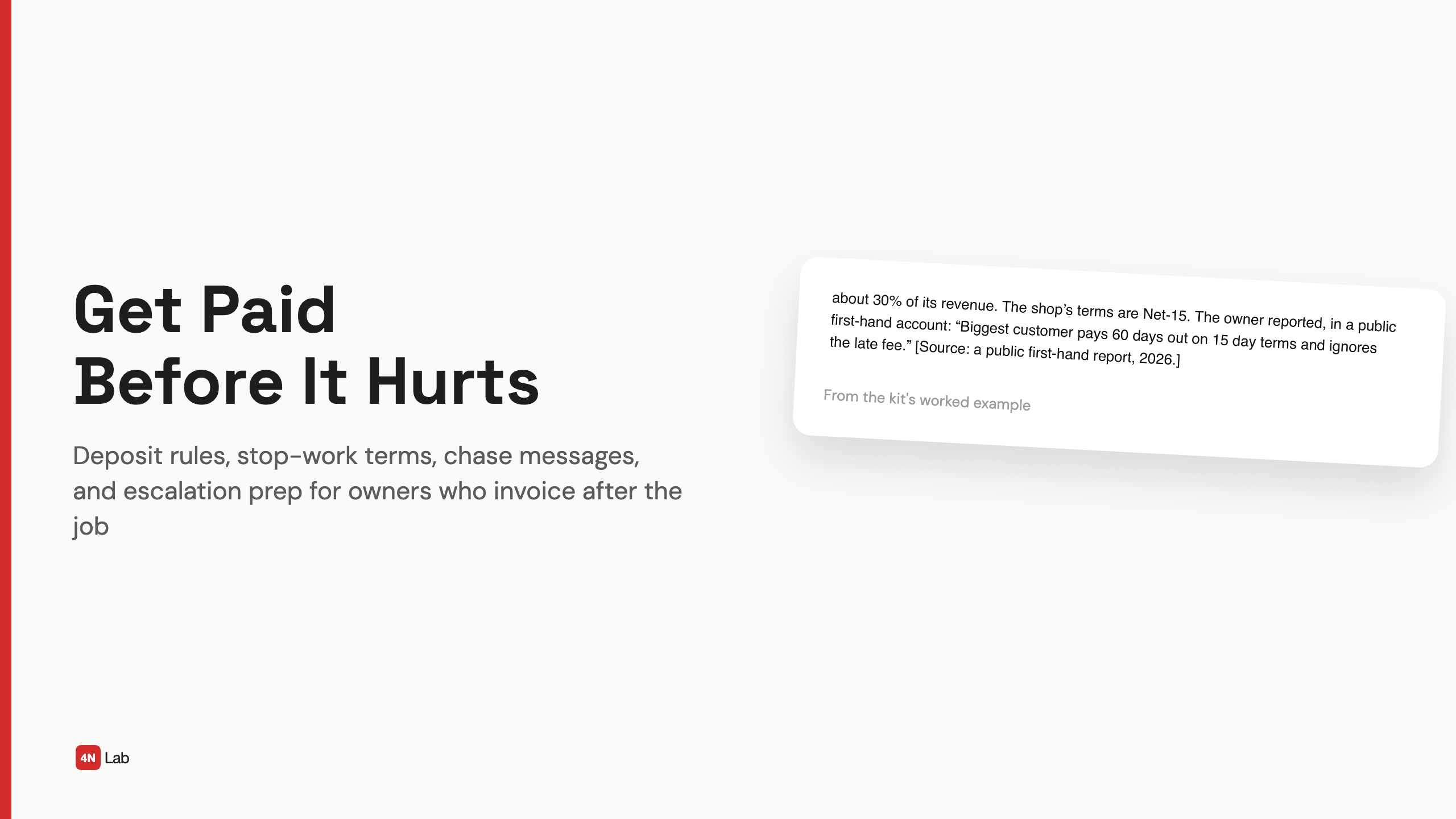
Payment reminder email and demand letter for payment: how owners chase late invoices
Payment reminder emails to copy now, a five-message chase sequence, and how to prepare a demand letter for payment, including when to call a lawyer.
 Business
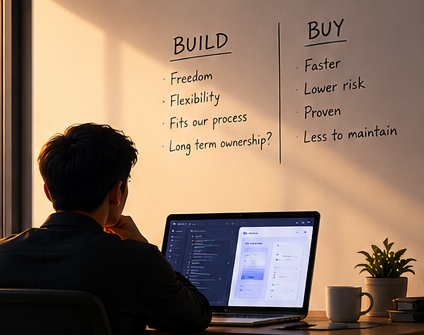
Build vs. Buy in the Age of AI
Eight years ago, Build vs. Buy was a question for enterprise IT. Now almost anyone can ask it. How AI coding changes the economics of custom software for enterprises, small businesses and solo builders, and what to ask before you build.