

Travel
Why group travel is still surprisingly difficult to book online
Online travel made the one-traveler, one-room booking easy. Booking for a group of ten is still a coordination problem, and that may be where the opportunity is.
4NLab · 2026-10-08
Simple bookings became easy
Booking a hotel room online is easy. Booking rooms for ten people can still be a headache.
We recently talked with a travel-tech founder building a platform where groups plan and book trips together. The conversation landed on a problem we ran into while building VinHMS: once a group grows past five or six people, the booking stops behaving like a normal hotel search.
By then you usually have several room types, different budgets, families with kids, couples, friends happy to share, people arriving on different days and, inevitably, different opinions.

Maybe the opportunity isn’t another booking engine. Maybe it’s making the complicated bookings easier.
The booking engine isn’t the whole problem
Most hotel booking sites are built for one traveler, or a small party making one decision. Search, compare, pick a room, pay.
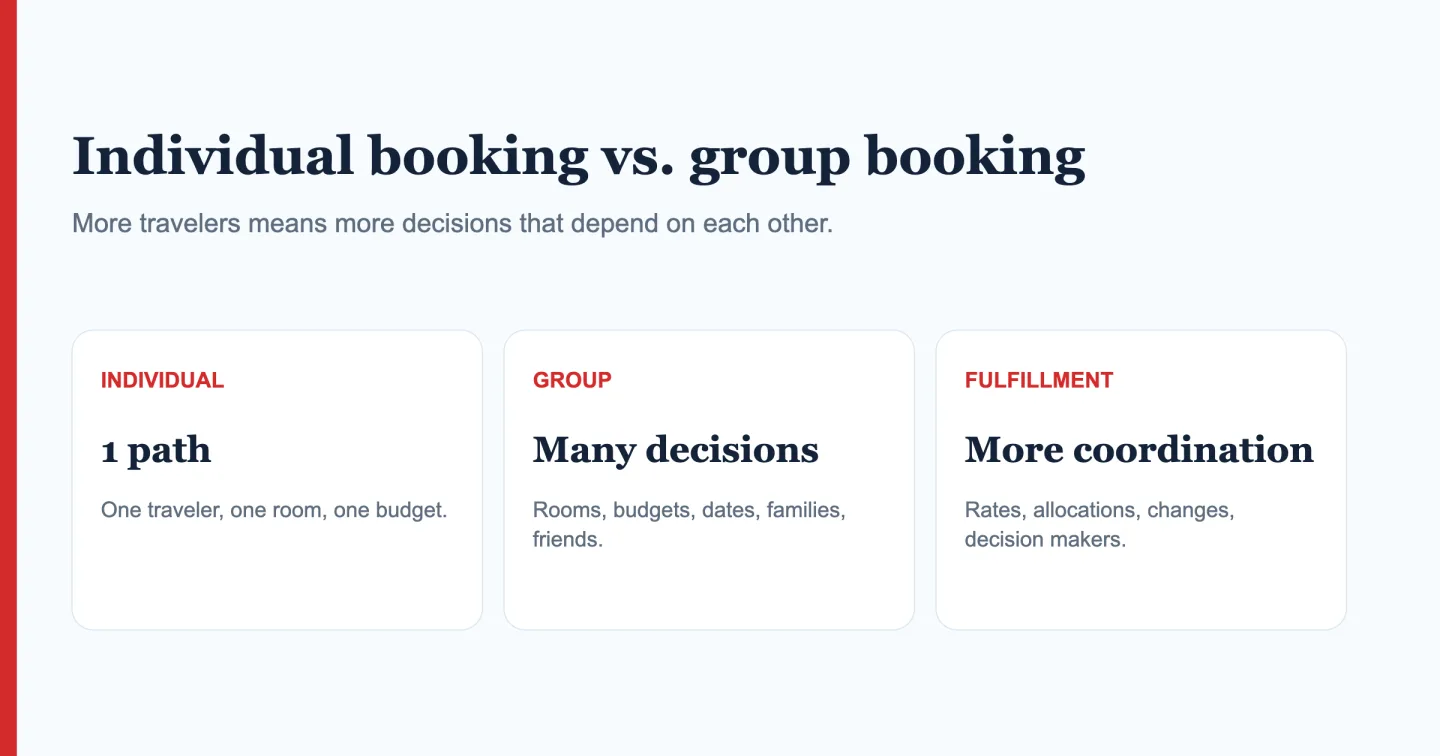
A group trip is a coordination problem before it is a transaction. People have to agree on dates, destination, who sleeps where, how much to spend, and sometimes who is paying for whom.
That’s one reason traditional travel agents still matter in many markets, Southeast Asia included. They wrangle the travelers, negotiate with hotels, allocate rooms and absorb the changes.
Negotiated rates and allocated inventory
When we built the travel-agent portal for VinHMS, one thing became clear quickly: agents don’t just need to search for rooms.
They need their negotiated rates and, often, inventory that has been held or allocated for them. Without that, everything falls back to email, spreadsheets, phone calls and confirming the same booking with the hotel again and again.
That’s a very different problem from putting public availability behind yet another booking screen.
Collaboration could be the missing layer
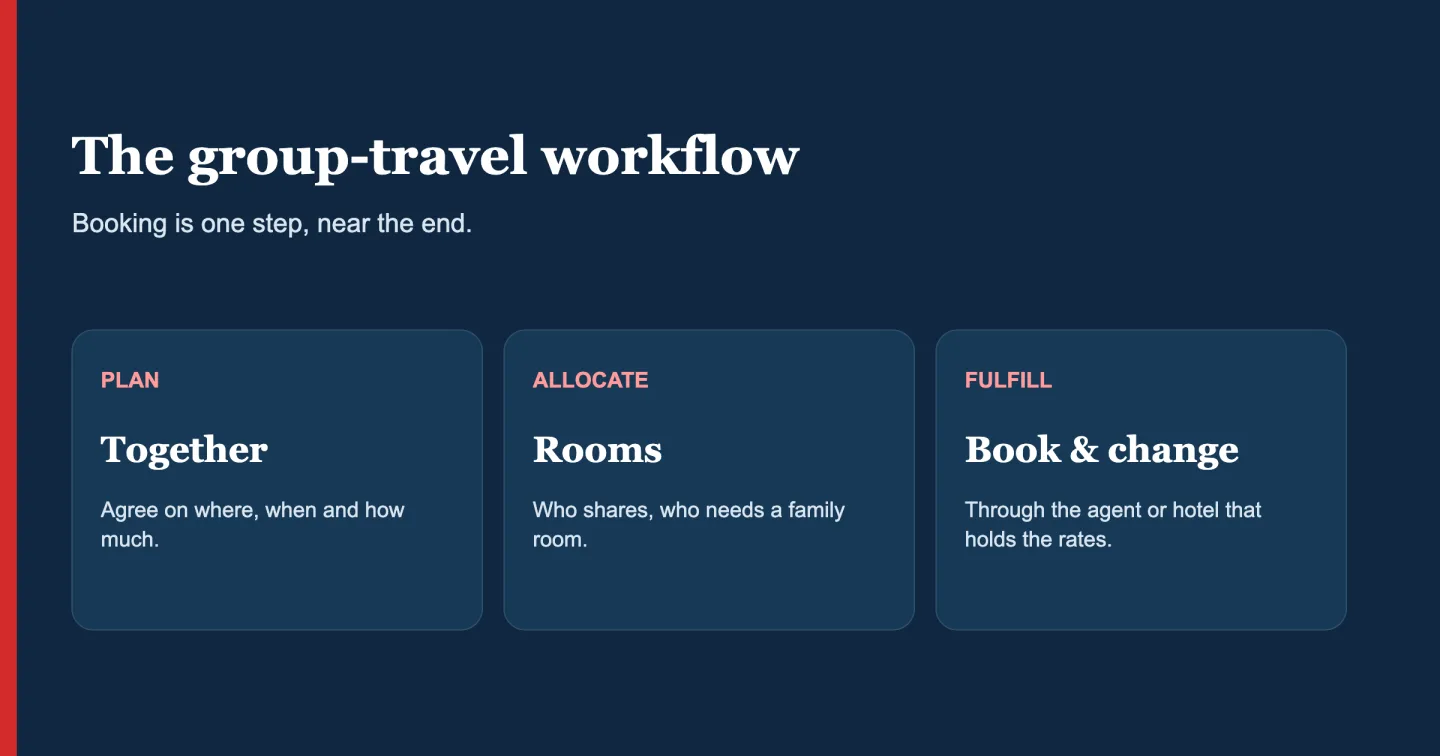
A collaborative trip-planning platform could come at this from another angle. Let travelers plan together first: settle the itinerary, budgets, room preferences and the big decisions before anyone reaches a standard checkout.
Then hand the group to the hotel, agent or supplier who can actually fulfill a complicated booking.
In that model, the software doesn’t replace the agent. It organizes the messy coordination around the agent and gives everyone one shared version of the plan.
Maybe the opportunity is the complicated booking
Travel technology has spent years making individual bookings faster, and it worked.
The bookings that still frustrate people are the ones that don’t fit one traveler, one room, one rate and one decision maker.
Maybe the opportunity isn’t another booking engine. Maybe it’s making the complicated bookings easier.