

Operations
Sometimes two numbers are better than an AI demo
A hotel breakfast buffet, two counts and one subtraction cut food waste by about 10 percent. Not every operational problem needs AI.
4NLab · 2026-09-30
A very simple operational problem
Some of the most useful software we’ve built did almost nothing clever.
We were recently talking with a founder who builds AI tools for hotels. The question was how to create value in hotel operations that you can actually measure. It brought back a small example from our VinHMS days: the breakfast buffet.
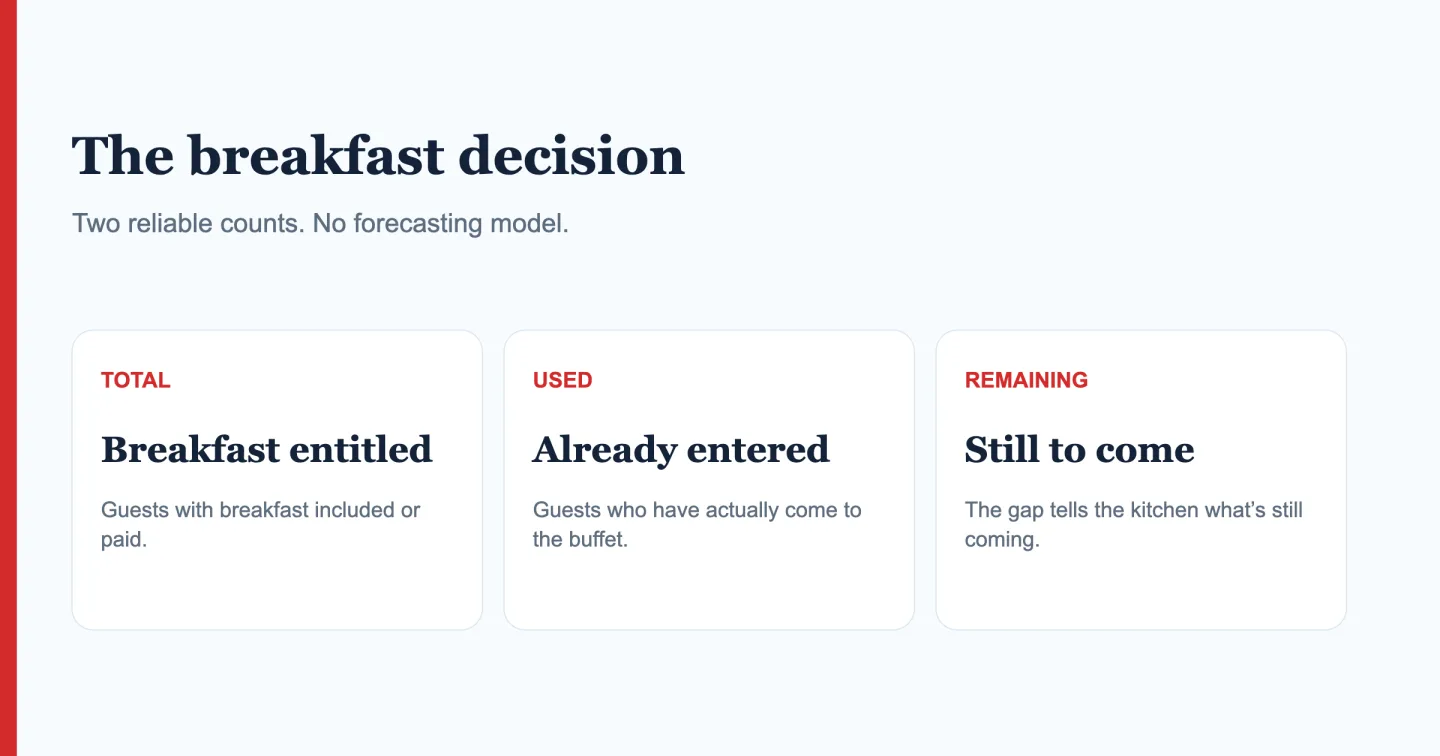
A hotel already knows how many guests have breakfast included or paid for. What the kitchen often doesn’t know, in real time, is how many of them have already eaten and how many are still on their way.
Two numbers are enough
What we built tracked two numbers: guests entitled to breakfast, and guests who have actually walked into the buffet.
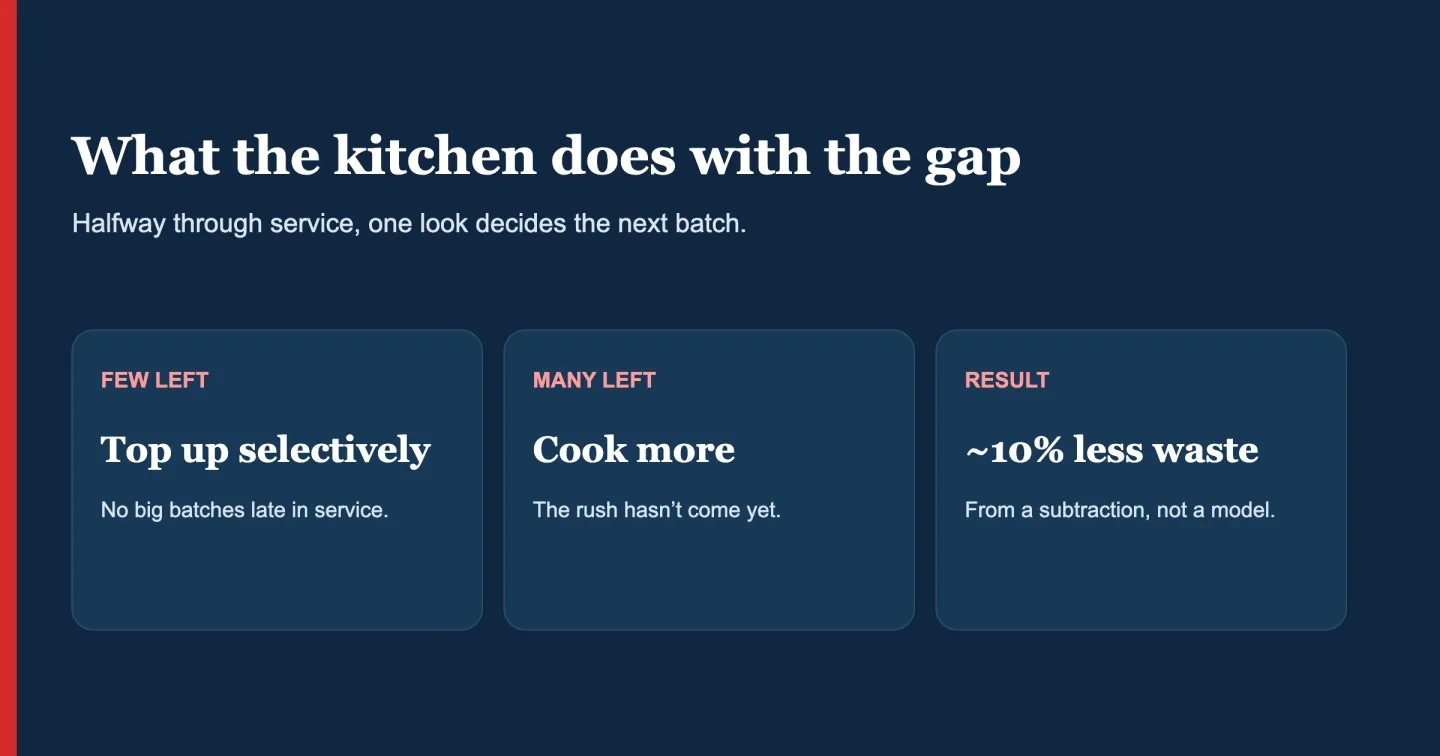
Halfway through service, the kitchen compares them. If most of the expected guests have eaten, there’s no reason to cook big new batches. The team rearranges what’s left and tops up only where it’s needed.
If a lot of guests haven’t shown up yet, the kitchen knows the demand is still coming and cooks more.

Sometimes two numbers and one decision beat an impressive AI demo.
The outcome matters more than the sophistication
That was the whole idea. No forecasting model. No AI. No attempt to predict what each guest would do.
Food waste fell by about 10 percent.
A general manager understands that number without a slide deck, and the kitchen acted on the counts the same morning. Nobody had to think about the technology.
A lesson for AI products
Today the talk is of AI agents that connect the PMS, POS, accounting, housekeeping, procurement and every other hotel system. Some of that will be worth building.
All that sophistication makes it easy to forget a basic rule of product work: hotels don’t pay for sophistication. They pay for better operations.
A 10 percent cut in food waste is worth the same whether it comes from a complex model or from subtracting one reliable number from another.
Find the smallest change that moves a measurable result
AI makes complex systems easier to build. The hard part is probably the same one we faced years ago: find the smallest change that produces a business result you can measure.
Sometimes complexity is needed. The problem should demand it, though. “The technology is available” isn’t a reason.
Sometimes two numbers and one decision beat an impressive AI demo.