
Hospitality
The room with the bad view deserves an honest listing
A flaw that rules a room out for one guest may not matter at all to the next. Clear descriptions let travelers make that call, and give search tools more facts to work with.
4NLab · 2026-10-25
The rooms hotels hesitate to sell
A founder described an idea we keep coming back to: make it easier to sell the rooms hotels would rather not offer. The room next to the elevator. The room whose window faces a wall.
The trick isn't hiding the drawback. It's saying exactly what it is and letting the guest decide whether the trade-off works for them.
We replaced the property management system at 45 hotels in Vietnam, and we'd expect plenty of hotels to recognize this, though we have no count of how many rooms get held back for this reason. A property can have demand and still struggle to present certain rooms honestly and attractively.
A drawback isn't the same for every traveler
Someone planning a special weekend may care a lot about the view. Someone arriving late and leaving early may care more about a clean bed, the location and the price.
The wall outside the window is still there. It just matters more to some people than others, and the opportunity is to match the room with a traveler who knows about it and doesn't mind.
This is about rooms that are fine to sell with an honestly described trade-off. A room that should be taken out of service is an operations problem, not a copywriting one.
“The window faces a wall” may be the most useful sentence on the listing.
Swap the euphemism for a fact
Hotel copy leans on adjectives: cozy, charming, full of character. They set a mood. They do almost nothing to explain an awkward room.
Compare "a charming room with character" with "the window faces the next building; this room is priced below our open-view rooms." The second gives the guest something concrete to weigh. (Any price comparison obviously has to be true for the offer being shown.)
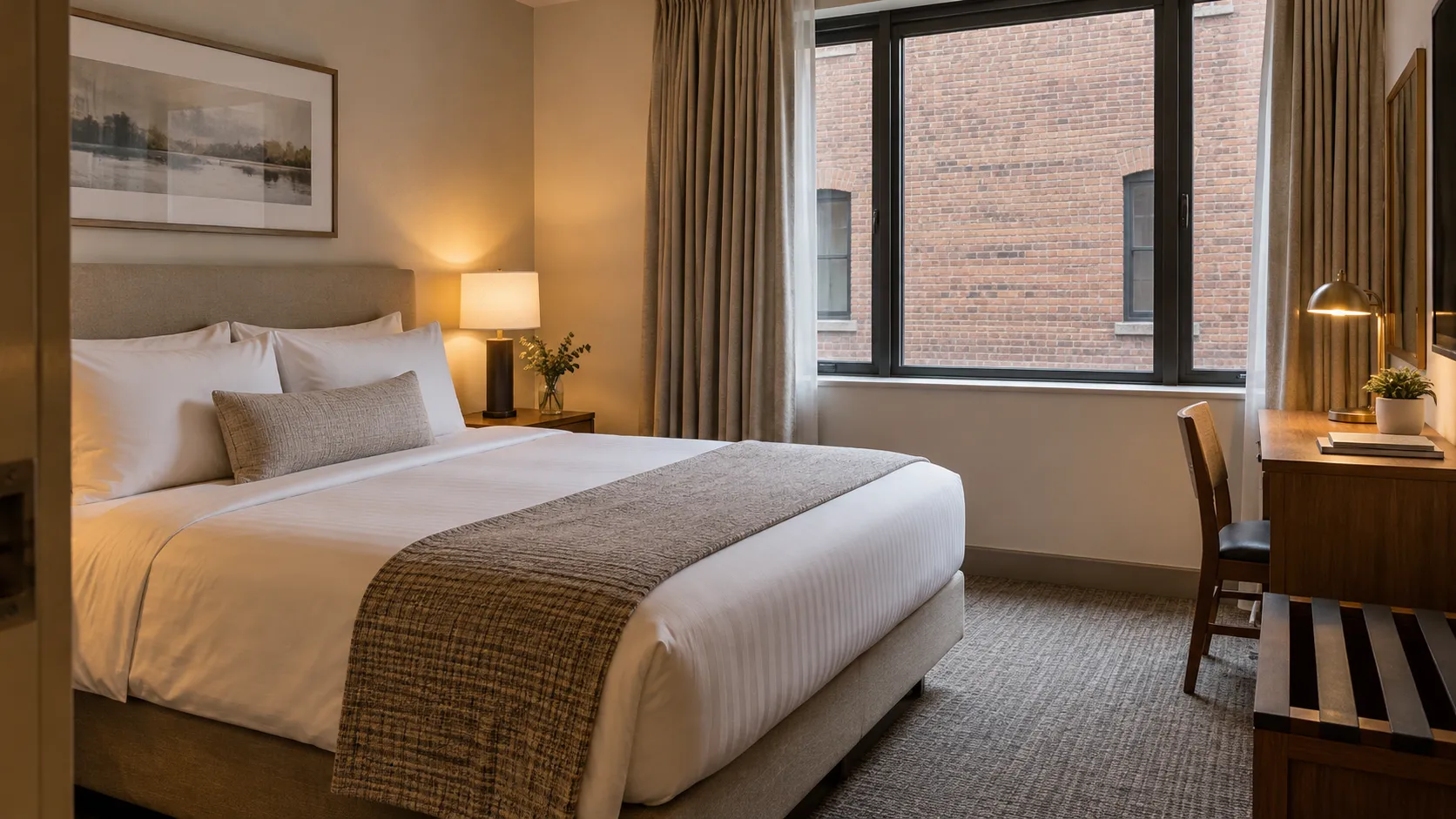
Show the actual view. Put the room's features and its limitation where the traveler will see them before booking, and make sure the description carries through from the room page to the booking confirmation.
Specific facts help search, too
There may be a second benefit as more travelers use AI-assisted search to describe exactly what they need. A system trying to match "one night, close to the station, don't care about the view" has more to go on when the listing contains concrete facts.
That's a guess about matching, not a promise about rankings. Google's guidance for its AI search features stresses the same basics as regular search: pages it can access, and content that's helpful and reliable. Nothing there rewards you just for admitting a flaw.
The strongest reason to write the listing clearly is still the guest. Better context for machines is a possible bonus. It doesn't replace accurate inventory or a good stay.
Check that expectations line up
Start with a small set of suitable rooms and an explicit offer. Make sure the photos and description match the room category actually being sold. Train staff to explain the same trade-off, so nobody undoes the honesty with a reassuring promise that isn't true.
Track conversion, the rate achieved, cancellations, complaints and what guests say after their stay. More bookings don't count for much if the description still leaves people disappointed.
Not every flaw can become a selling point. But the fact you've been avoiding may be exactly what one guest needs to book with confidence.