
Parks
The QR code is not the experience
A family and a couple can visit the same attractions and want very different days. Better routes and content that changes may matter more than another layer of technology.
4NLab · 2026-10-22
What does the guest actually feel?
On a recent call about camera and augmented-reality experiences, we kept coming back to one question: from the visitor's side, what changes?
A demo can make a QR scan look impressive. The visitor, meanwhile, is just trying to have a good day. If the scan adds a step without helping them decide what to do next, it's solving the presenter's problem, not theirs.
The part we found most interesting had little to do with scanning. It was the journey that comes after.
One park, different days
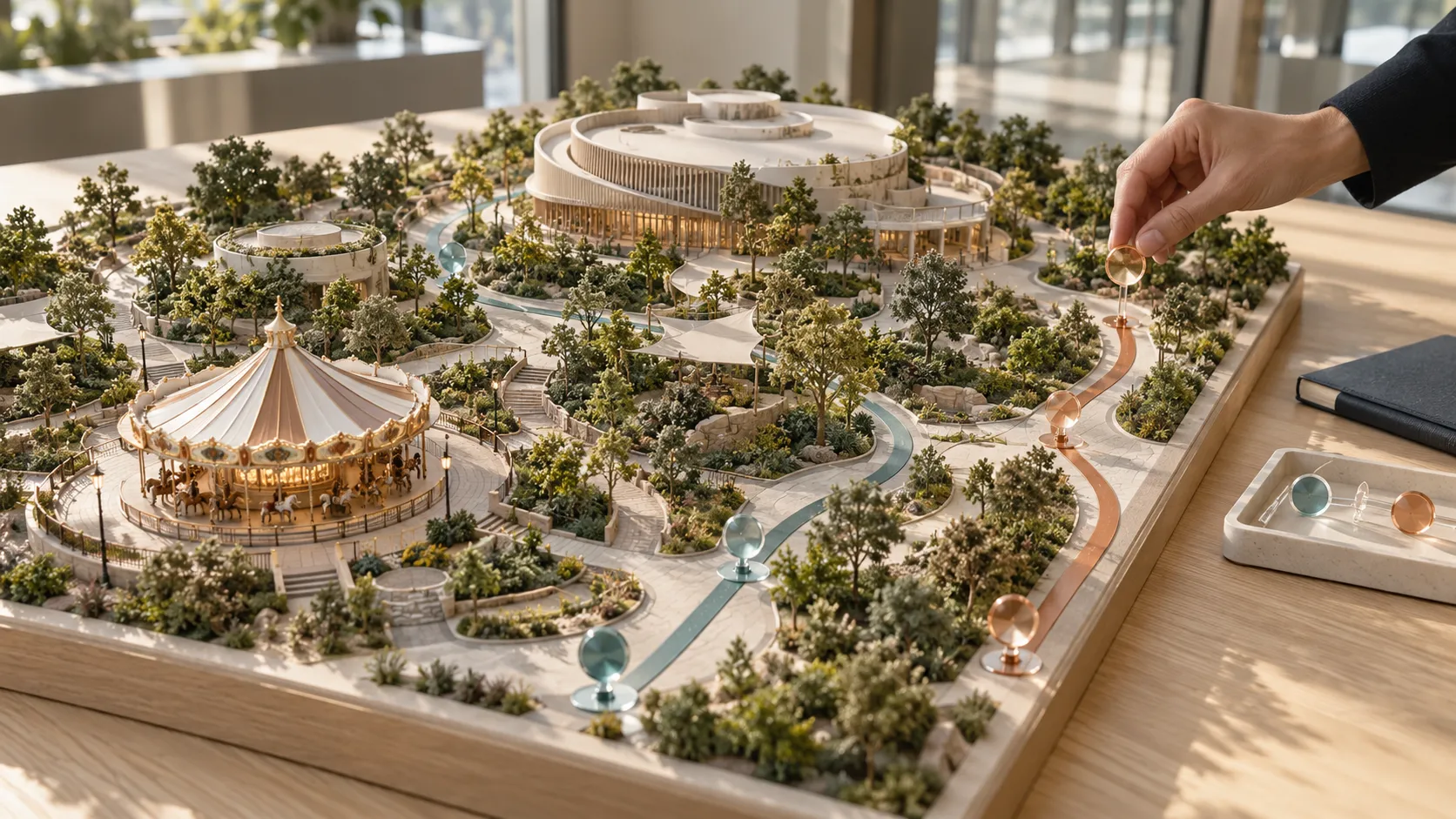
Picture a family with young children and a couple visiting the same theme park. Same gate, same map. That doesn't mean they want the same route.
The family may care about shorter walks, places to rest, rides the kids can actually go on, and being near food at the right moment. The couple might want a different pace, a particular show or the big rides. A good product helps each group choose without making anyone learn the whole park first.
Those are guesses to test, not rules about visitors. Guests should be able to pick their preferences and change them. The point is to build the visit around what each group came for instead of pushing everyone through the same digital flow.
The park may stay the same for years. The journey through it doesn't have to.
The route should change when the park does
Physical attractions are expensive and can stay put for decades. A route, a seasonal activity or a story that links existing rides can change far more often.
That matters day to day. A closed ride shouldn't stay at the center of a recommended morning. A seasonal event should be easy to drop in. A family route should only promise the facilities and information the park can actually deliver.
So the operator needs a simple way to make those changes. If every tweak becomes another vendor project, the experience goes stale soon after the launch team leaves.
Content and connections do the hard work
A QR code is a handy way in. On its own it doesn't set anyone apart. The value is in useful content, sensible recommendations, and links to the systems that know what's open.
Start with the information the promise requires. A fixed itinerary needs much less than a route sold as reacting to what's happening in the park right now. If you don't have live availability, don't dress up a fixed recommendation as real-time intelligence.
Then measure what happens after the scan. Do guests follow the route, find it helpful, finish the activities, ask staff fewer basic questions? A high scan count can sit right next to a disappointing day.
A hotel guest may want something else
We'd be more careful about carrying the same game into a hotel. A lot of hotel guests just need an answer: where breakfast is, how to book the spa, what time the pool opens. A game can work in some places, but it has to earn its spot.
For a theme park, we'd test two clearly different routes through existing attractions, let staff update them, and watch how visitors respond. Keep it small enough to learn from what people actually do. The strongest pitch is the better day you help someone have. The QR code is just how they get started.