
Business
Small businesses don’t buy “efficiency”
Saving an owner a few hours rarely closes a sale. Helping them make more money usually does. Why revenue is the better pitch for small-business software, hotels included.
4NLab · 2026-08-27

The efficiency pitch is not enough
We have never trusted “we save you time” as the main pitch to a small business. We learned that the hard way with S3 years ago, and we have watched it happen again in hospitality.
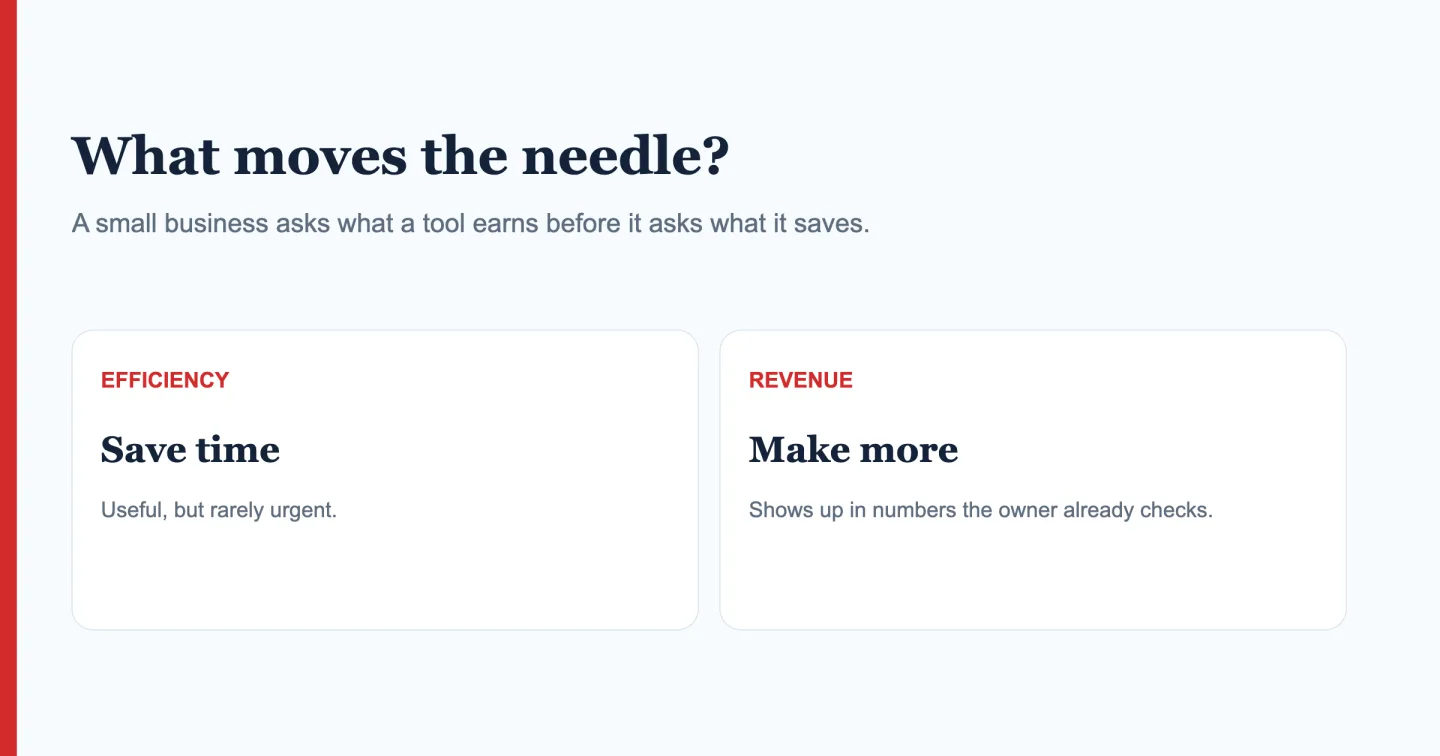
At a large company, saving a few thousand employee-hours is an easy business case. Someone owns the budget, someone builds the finance model, and the team is big enough that small gains add up. A small business works differently. The owner is already doing three jobs. Margins are thin. Another subscription has to compete with payroll, rent, stock and marketing, and it usually loses.
Saving a few hours of back-office work is useful. Useful rarely gets anyone to sign this week.
Revenue is easier to understand
Revenue is a different conversation. Sell one more room, collect one more payment, convert one more guest, add one more service to a sale that is already happening: an owner gets that straight away.
That doesn’t mean every product should dress itself up as a revenue product. It means the easiest way into a small business is usually an outcome the owner already tracks. Productivity matters. Revenue just takes fewer sentences to believe.
Hospitality shows this clearly. Most independent hotels run lean. Shave ten minutes off an admin task and the manager will thank you. Help the hotel earn more from a guest who is already on the property, and you have their full attention.
We help you make more money, and we automate the work it takes to collect it.
Guest trust is an opening
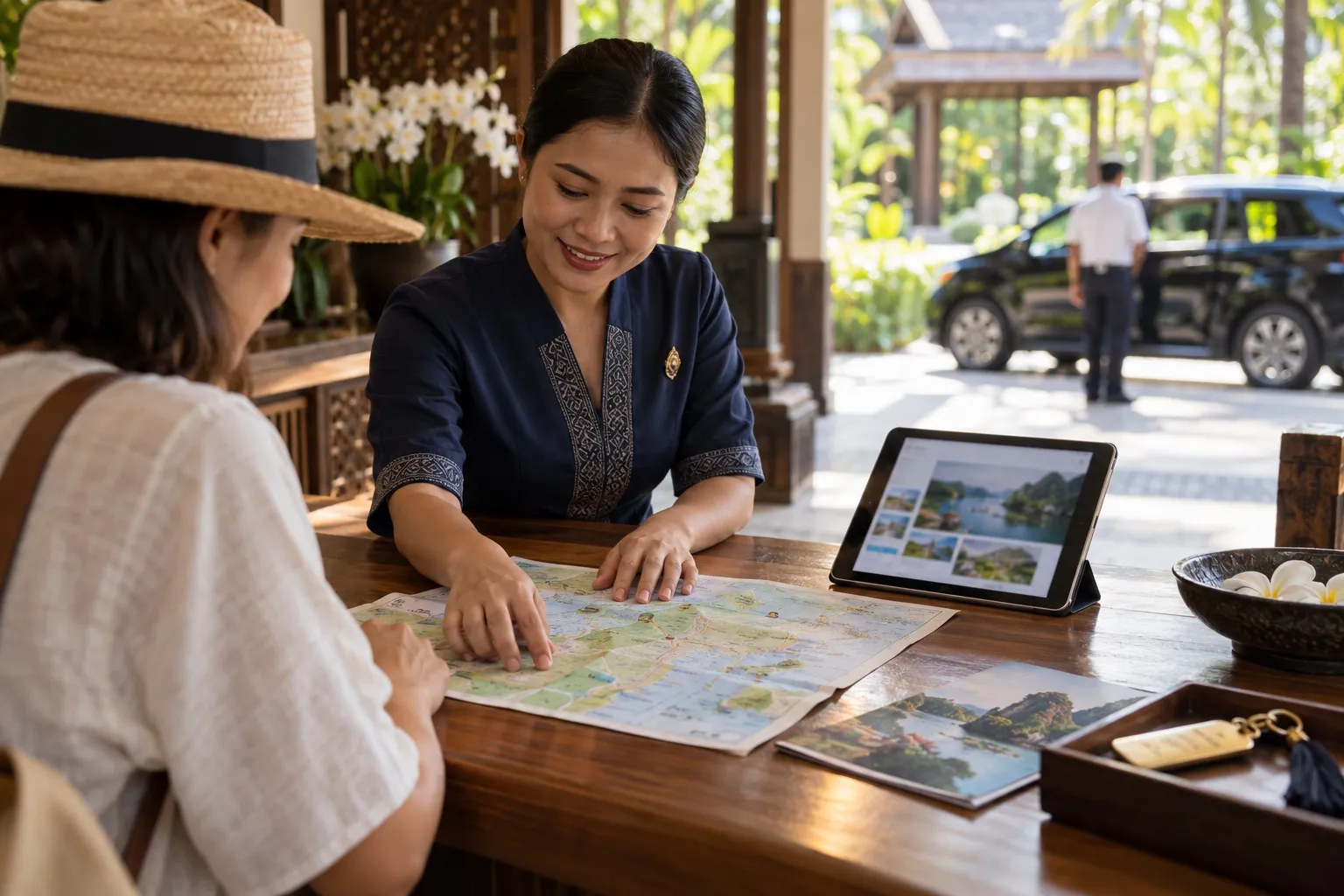
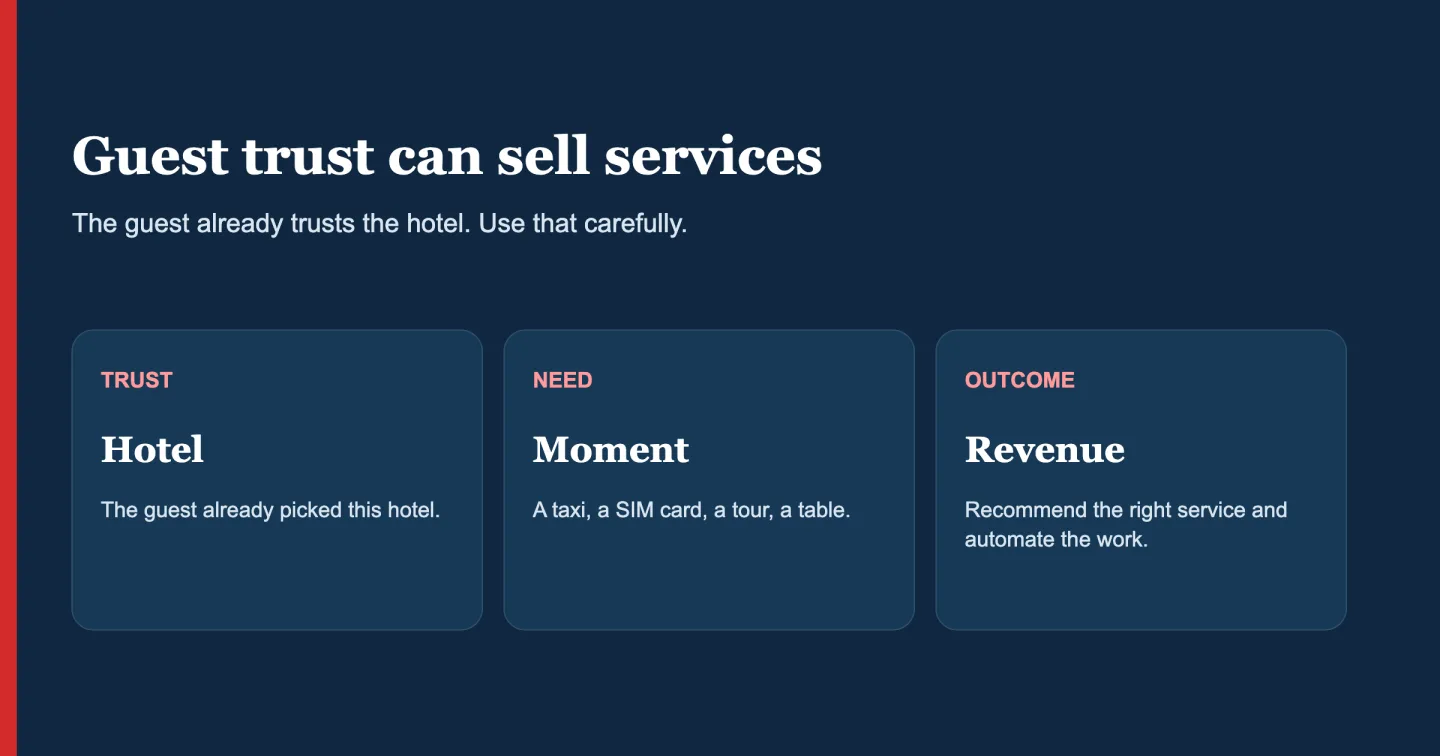
Hotels already have something marketplaces pay a fortune to acquire: the guest’s trust. A guest who needs a taxi, a SIM card, a tour or a dinner table listens when the suggestion comes from the hotel they picked.
So the opportunity goes beyond the room. The hotel doesn’t have to run every service itself. It can be the place the guest trusts to find and buy the right one at the right time.
So the commercial question gets bigger than automating hotel operations: how do you tie operations to extra revenue without turning the stay into a string of upsells?
What this means for AI in hotel operations
There is still real value in an intelligence layer that sits across the PMS, the OTA channels, the accounting system, the spreadsheets and whatever else the hotel runs. It can reconcile bookings, check payments, find discrepancies and chase the exceptions.
Pitch it only as “we reduce your workload,” though, and it sounds like one more efficiency tool fighting over a small software budget.
The stronger pitch is closer to this: we help you make more money, and we automate the work it takes to collect it. The owner gets an outcome they care about, plus the operational work that would otherwise stand between them and it.
For a small business, revenue is easier to understand than productivity. It’s probably easier to sell, too.