
Hospitality
Day-use bookings don’t need a new PMS. They need better reporting
One room can host three guests in a day. The trouble starts when a report built around room nights tries to explain what happened.
4NLab · 2026-10-20
One room, three bookings
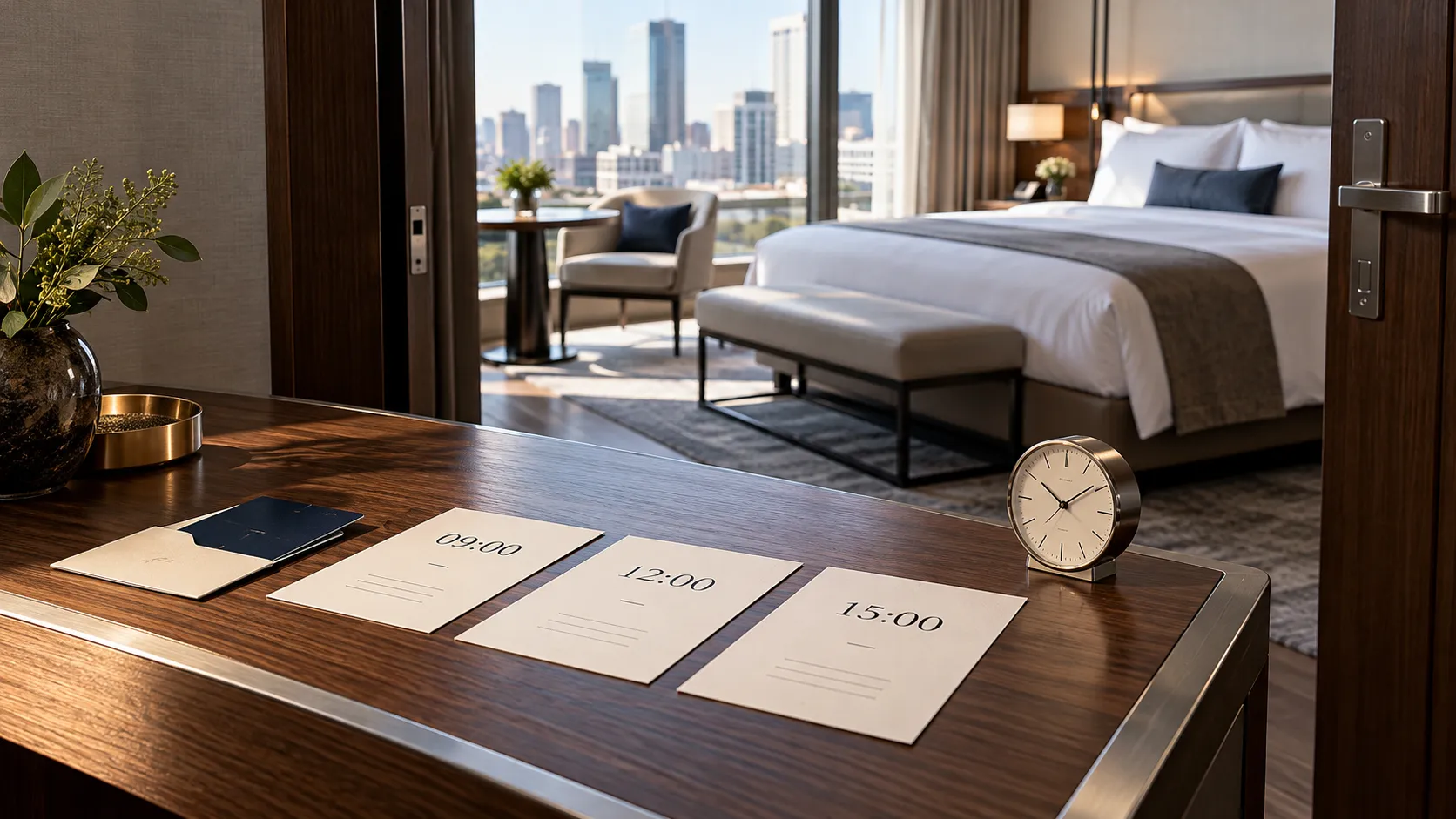
One room. Three day-use bookings. A report that seems to say the hotel ran at 300% occupancy.
We like that example because it shows how a hotel operation anyone can follow turns into a confusing software problem. On a recent call, a founder walked us through a day-use booking startup and the practical work of selling rooms by the hour. A guest buys a short stay, the hotel gets the booking, and someone at the front desk makes it happen. Staff have no trouble telling a guest who leaves at three in the afternoon from one who is sleeping there tonight.
The hard part is getting that difference into a system, and then into the numbers management uses to run the hotel.
When a reporting mismatch becomes an operations problem
A lot of hotel software is organized around room nights. Day use adds a second unit: a stay with a start and end time inside one day. Count each short stay as if it were an occupied room night and the report stops making sense. The 300% figure describes that mismatch. It isn't how every PMS does the math.
Then come the questions a booking screen doesn't answer. Where does the revenue show up? Can finance trace it back to the payment? Is the room clean for the next guest? Can it still be sold for tonight?
Fix the report before you replace the system
We'd start with one operational report that lines day-use activity up against the hotel's existing records: the bookings, their time windows, the revenue and the room status. Overnight occupancy keeps its usual definition.
That's a reporting layer. It doesn't stand in for correct accounting or accurate inventory, and it won't make a double booking go away. What it does is stop managers from forcing two different kinds of activity into one number that misleads everyone.
A deep two-way integration may be worth building later. First find out what the hotel needs to record and how staff already handle it. Automate an unclear process and you just get the confusion faster.
Three guests in one room are three transactions, not three room nights.
The channel can be simpler than the integration
Distribution has the same trap. A promising partnership can wait months for a technical integration before anyone learns whether customers want the offer at all.
In an airport lounge, a small sign with a QR code and a trackable offer would make a decent first experiment, if the lounge operator agrees. It won't settle every commercial question. It will show whether people click, book and turn up.
Email or chat isn't where every business should end up. While people are still handling exceptions the software can't represent yet, though, they work fine.
Start with the hotels that want the business
On the call we suggested looking hard at independent city hotels and the local reasons someone books a room for the day. A wellness pitch to business travelers is one guess. Couples, people killing time between appointments and other short-stay guests probably want different things, and each group should be tested locally instead of lumped into one market.
The first pilot should tie together demand, room turnover, payment and reporting. If those pieces work, the hotel has evidence for the next investment. A three-hour booking doesn't call for a new PMS. It calls for making those three hours clear to run and worth selling.