

Business
Creating value and capturing value are very different things
Software can clearly make a customer more money and still not get paid for it. What nine months of on-off testing with a grocery wholesaler taught us about value, attribution and price.
4NLab · 2026-09-03
Nine months of proof
Years ago, we spent about nine months proving to a grocery wholesaler that our software was making her money.
We had built a POS system that could run in-store promotions paid for by a large consumer brand. The idea was simple: run targeted promotions through the system and measure what sold. Her revenue went up by roughly 10 to 15 percent.
With that result in hand, we proposed what looked like a fair deal: pay us about $1 for every extra $15 we bring in.

Proving the result was the easy part
She said no. Her reason made sense from where she stood: revenue always goes up after Lunar New Year.
So we switched the promotion off. Revenue dropped. We switched it back on. Revenue rose.
Then the reason changed. She had just bought two delivery trucks, so maybe the extra capacity explained the growth.
We ran it again. Off, on, off, on. Three cycles over about nine months, and revenue moved the same way every time.
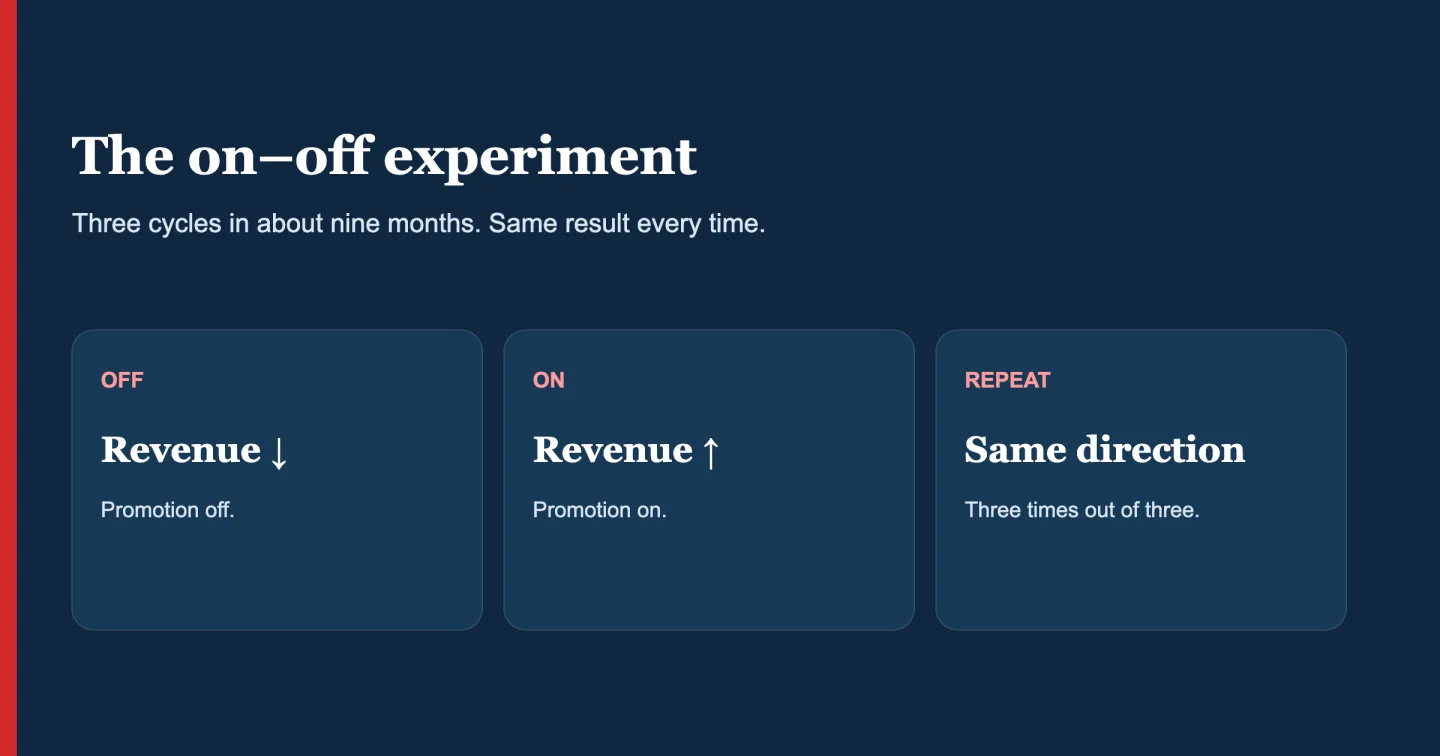
Creating measurable value doesn’t mean the customer will credit it to you. And credit doesn’t mean they’ll pay in proportion.
Attribution is its own problem
In the end she agreed the system was helping. That sounds like a win. It was really the start of the commercial conversation.
The experiment proved the value existed. Next we had to agree on attribution: how much of the gain belonged to the software, and how much to the season, the trucks, the staff, or a dozen other things going on in her business?
The gap exists because the customer lives the result as part of the whole operation. The vendor sees one intervention. The customer sees a business that never stops moving.
Then comes the price
Once we agreed the software had contributed, the talk turned to price. Her answer, more or less: yes, it helps, but $1 is too much. How about 30 cents?
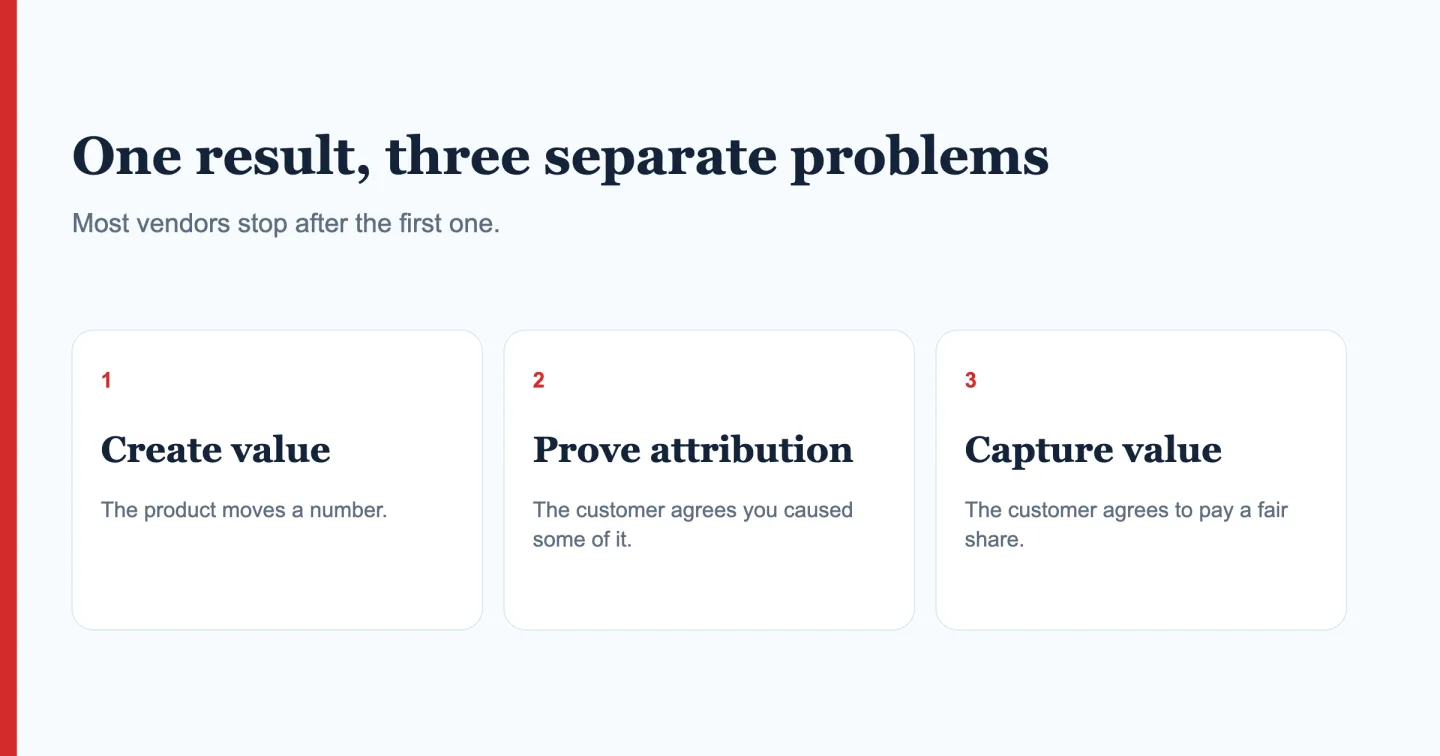
We still think about that conversation. It pulled apart three things B2B software companies tend to treat as one: creating value, proving you caused it, and getting paid a fair share of it.
They are separate problems. Solving the first doesn’t solve the second, and solving the second doesn’t guarantee the third.
AI does more of the work. The pricing fight stays.
AI makes the product side far more interesting. Software no longer has to stop at a red number on a dashboard. If someone owes the company money, an AI system can spot it, draft the email, follow up and help collect.
That beats another dashboard, because the system is doing part of the work that produces the result.
The old commercial question doesn’t go away, though. Who gets the credit? The employee who approved the action? The salesperson who closed the account? The operator who designed the process? The AI that sent the follow-up?
Doing the work gets you into the conversation. Getting paid for the value you created is a separate fight.