

Technology
AI orchestration solves the replacement problem, not the trust problem
An AI layer on top of a hotel’s existing systems is far easier to bring in than a new PMS. It still has to earn something harder: enough trust to be let into the data.
4NLab · 2026-09-15
Replacing the core system is painful
One reason we like AI orchestration: the customer doesn’t have to replace their core system.
In hotels that matters a lot. Replacing a PMS means data migration, staff training, new interfaces, and disruption at the front desk, in finance and in distribution, plus all the small habits that grow around a core system over the years.
We spent years building a PMS, so we know how high that switching cost is. Even when the new product is better, the move itself becomes the reason the hotel puts off deciding.

An orchestration layer is easier to bring in
An AI layer on top of the existing stack changes the offer. Connect the PMS. Connect accounting. Connect the OTAs. Connect the spreadsheets.
Then let the system watch, reconcile and check, and later act across those systems, without asking the hotel to rip out what already runs the property.
On paper, technically and commercially, that’s far easier than replacing the core.
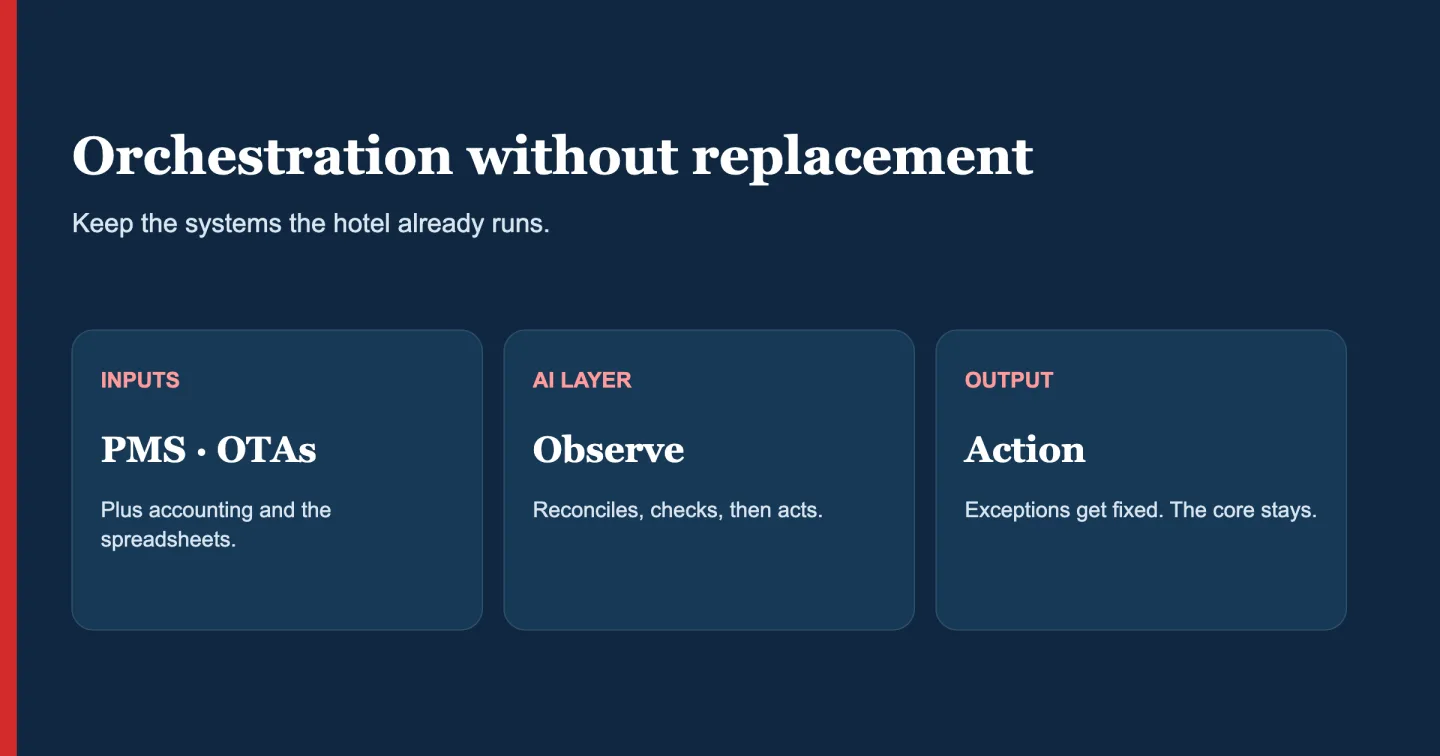
You solved the replacement problem. You didn’t solve the trust problem.
But the problem moves
The easier path just moves the hurdle somewhere else.
The AI still needs the hotel’s data: bookings, guest details, payments, rates, invoices, operational notes, and data from systems that were never built to agree with each other.
Hotel data is rarely clean. So the orchestration layer needs enough access to make sense of the gaps, compare records, and sometimes make or suggest changes.
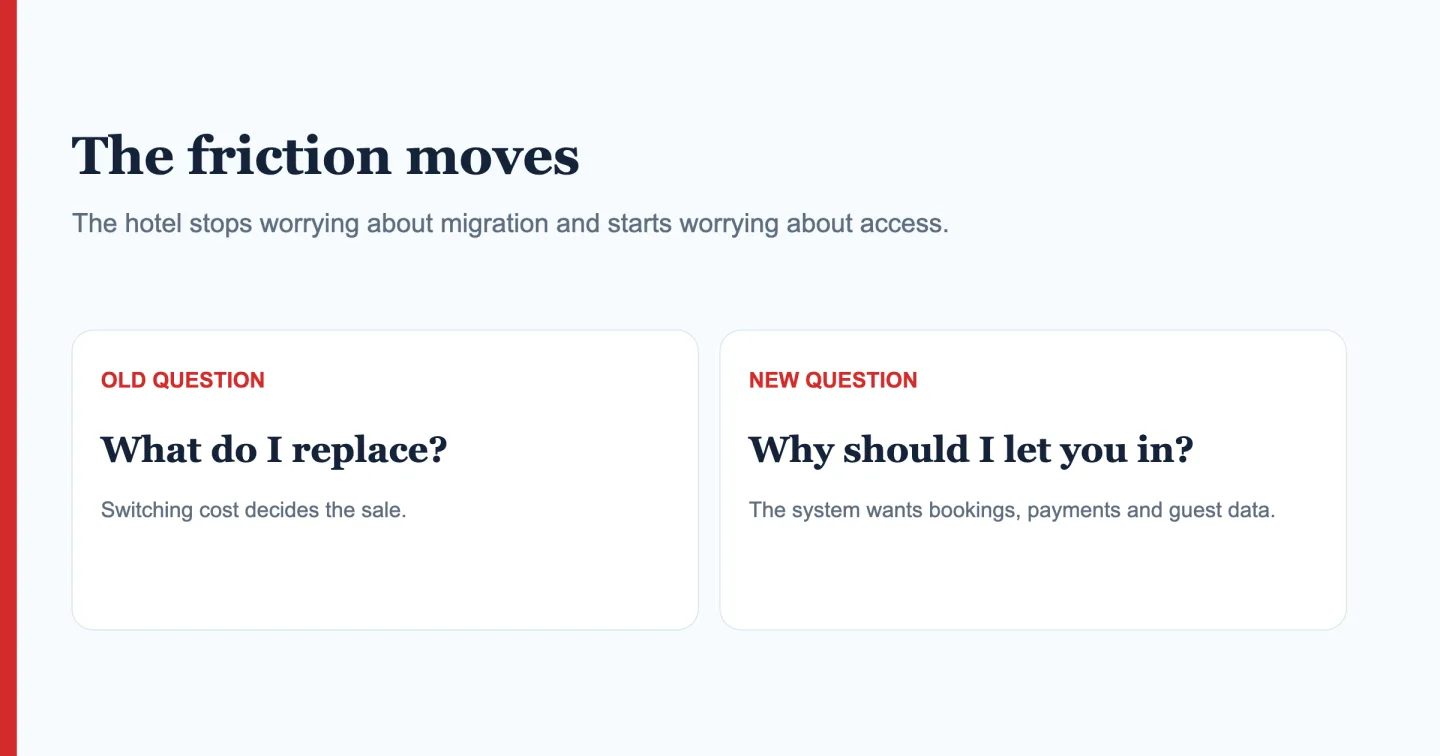
The question changes from switching to trust
Now the hotel isn’t asking “What do I have to replace?” It’s asking “Why should I let you in?”
Security and privacy are part of that, but only part. The hotel also wants to know the system understands how it operates, won’t cause chaos in the middle of service, and can explain what it’s doing when the data is a mess.
Nobody answers that question with a demo.
Start narrow, prove it, then expand
The practical answer is the one enterprise software has used for decades: start narrow.
Pick one use case where the inputs make sense and the result can be measured. Deliver it, again and again. Get one property willing to say, “This worked.”
Then widen access, workflows and autonomy a step at a time. A run of results earns more trust than a long architecture presentation.
AI can cut the cost of building the product a lot. We’re not convinced it cuts the cost of earning trust at all.